

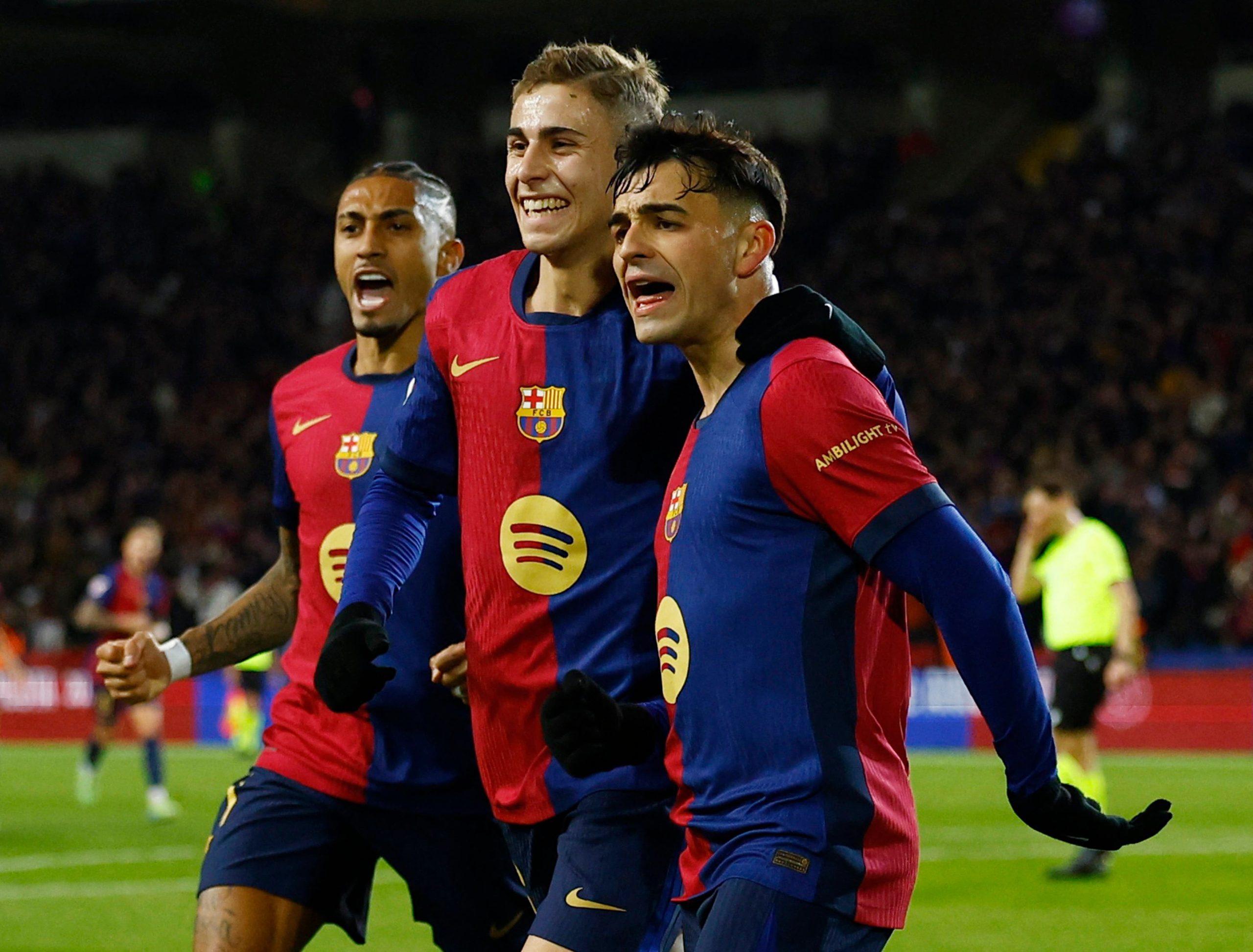
Barcelona’s 4–2 defeat against Paris Saint-Germain has added an uncomfortable question to the build-up to El Clásico: will the disappointment sharpen Barça’s focus against Real Madrid, or leave them carrying doubt into their biggest domestic test?
Hansi Flick’s side suffered their first defeat of the season in Paris on Tuesday, despite twice recovering from behind. With Real Madrid visiting on Sunday, 25 October, the opportunity to respond arrives quickly.
Yet a defeat does not automatically produce either a heroic comeback or a crisis. Barcelona can be disappointed and determined at the same time. They can also feel motivated while still needing physical recovery.
The decisive issue is how effectively the coaching staff turn the PSG result into specific improvements. Anger may provide the initial energy. Organisation, decision-making and recovery must make that energy useful.
What the PSG defeat actually tells us
The sequence of goals offers a more useful starting point than the final score alone.
Xavi Espart equalized in the 55th minute after PSG’s first-half opener. Lucas Hernández restored the hosts’ lead in the 72nd minute, before Lamine Yamal made it 2–2 in the 79th. Vitinha scored in the 81st, and Fabián Ruiz added PSG’s fourth in the 86th.
Barcelona therefore have two different aspects of the performance to examine: their capacity to respond to setbacks, and their failure to preserve the position those responses created.
Coming back twice is evidence of persistence within that match. It does not guarantee confidence against Madrid, but it undermines the idea that Barça simply surrendered when the evening became difficult.
The late goals raise the more urgent concern. Having recovered to 2–2, Barcelona still finished empty-handed. The priority before Sunday should be understanding how to make their next recovery, lead or period of dominance last.
The tactical points below are analysis and proposed adjustments, rather than claims about private dressing-room discussions or confirmed training plans.
Lesson one: manage the minutes after scoring
The gap between Yamal’s equaliser and Vitinha’s goal was only two minutes. For Barcelona, that makes the period immediately after scoring an obvious subject for review.
An equaliser changes the emotional temperature of a match. Players may sense that the opposition are vulnerable and push forward in search of another goal. That can be productive, but only if the team retains enough structure to defend the next attack.
Against Madrid, Barcelona should aim to make their first few possessions after a goal deliberate. Keep reliable passing options around the ball, avoid forcing a difficult forward pass, and make sure players behind the attack are positioned to respond if possession changes.
That does not mean abandoning ambition. It means recognising that restoring parity and taking control are different achievements.
A strong reaction in El Clásico could therefore look surprisingly calm: a controlled restart, a patient passing sequence and a team that refuses to let excitement open unnecessary spaces.
Lesson two: make pressing a collective decision
One useful question for Flick’s analysis is whether pressure on the ball and the position of the defensive line remained connected throughout the game.
A high defensive line needs the players ahead of it to make forward passes difficult. If an opponent has time to look up and pick a run, defenders can be left dealing with a problem that began much further up the pitch.
Barcelona’s adjustment should depend on the situation. When the nearest players can press together, the team can squeeze forward. When that pressure is unavailable, protecting space and briefly dropping into a more compact shape may be the better choice.
The mistake would be treating every Madrid possession as an invitation to sprint forward. One player pressing alone can create an opening for the opponent rather than close one.
The desired reaction is coordinated aggression: players moving together, with a clear understanding of when to attack the ball and when to protect the next passing lane.
Lesson three: protect attacks before possession is lost
Barcelona also need to examine the positions they occupy while attacking.
If too many players move ahead of the ball at once, a misplaced pass can leave a defender facing several choices without enough support. The solution begins before the turnover.
One full-back can provide width while the other stays in a more conservative position. A midfielder can remain available behind the ball. The centre-backs can adjust their spacing according to where the attack develops.
These are possible tools, not a demand for a complete tactical overhaul. The objective is to preserve Barça’s attacking threat while reducing the amount of open space opponents can exploit.
Against Madrid, the quality of an attack should be judged partly by what happens if it breaks down. Barcelona need positions that support both the next pass and the first defensive action.
Lesson four: share the responsibility for creating chances
Yamal’s equaliser in Paris gave Barcelona a route back into the contest. However, asking one attacker to repeatedly rescue difficult matches is a fragile approach. LALIGA
Against Madrid, Barça should seek to create several problems at once. Movement on the opposite flank, well-timed midfield runs and useful passing options around Yamal can prevent the attack from becoming predictable.
If Madrid commit extra attention to one side, Barcelona should be ready to use the space elsewhere. A quick switch of play may be more effective than asking an isolated attacker to beat multiple opponents.
The lesson is about distributing responsibility. Individual quality becomes more dangerous when the team creates favourable situations for it.
Will Barcelona feel down before El Clásico?
Disappointment is understandable, but the squad’s actual emotional condition cannot be established from the scoreline.
There are reasons to believe a constructive response is possible. Barcelona recovered twice during the match, and their previously perfect start provides a wider body of work than one difficult evening. Flick can acknowledge the errors without presenting the entire approach as broken.
The danger would be allowing one defeat to change every decision. Players who become excessively cautious may hesitate over passes they normally complete confidently. Others may attempt difficult actions simply to prove that the loss has not affected them.
A useful coaching message would therefore combine accountability with clarity: identify a small number of correctable problems, explain the solution, and preserve the habits that have been working.
Madrid’s presence makes motivation easy to imagine. It does not tell us whether Barcelona will execute well. That distinction matters.
Will they be tired against Real Madrid?
The matches fall five calendar days apart, from Tuesday in Paris to Sunday’s Clásico. That offers a recovery window, although it does not prove that every player will be equally fresh.
A late concession is not, by itself, evidence of exhaustion. Tactical decisions, positioning, opponent quality and individual execution can also influence the final stages.
Likewise, defeat should not be confused with physical fatigue. Losing can make a demanding evening feel worse emotionally, but the workload must be assessed separately.
For Flick, the practical questions concern individual minutes, travel, recovery and readiness. Selection should reflect who can perform the required role effectively, rather than a desire to make a dramatic statement after the defeat.
Substitutions also deserve careful planning. If Barcelona intend to press intensely, they need a way to sustain collective movement when some players begin to lose sharpness.
What would a genuine reaction look like?
Supporters understandably want a strong response against Real Madrid. But the best evidence will be in Barcelona’s decisions.
| Area | Constructive response | Warning sign |
|---|---|---|
| Opening minutes | Assertive play with close support around the ball | Rushed attacks driven by urgency |
| Pressing | Several players moving together | Isolated chasing that opens passing lanes |
| After losing possession | Immediate pressure or an organised retreat | Players scattered ahead of the ball |
| After scoring | A controlled restart and clear positioning | Overcommitting in search of another quick goal |
| After conceding | Continued movement and disciplined decisions | Frustration, hesitation or individual rescue attempts |
These details can reveal improvement even before the score changes. They also provide a fairer assessment than equating an early goal with perfect preparation.
Barcelona could begin brightly and still need to manage difficult periods. Their response will be tested most clearly when the match stops going their way.
A setback Barcelona can use
The PSG defeat can influence El Clásico, but it does not determine its outcome.
Barcelona have evidence that they can respond within a difficult match. They also have a clear reason to improve the control that follows those responses. The challenge is to carry the determination shown in Paris into a more complete performance against Madrid.
The most convincing reaction would combine attacking confidence with better protection behind the ball, collective pressing and calmer decisions at decisive moments.
Barça do not need to pretend the defeat meant nothing. They need to make the lessons visible. Against Real Madrid, the strongest answer will be a team that competes with conviction and manages the game with greater care.





Barcelona will be win 🏆 on Sunday against real Madrid
Hopefully we will do it. Visca El Barça