
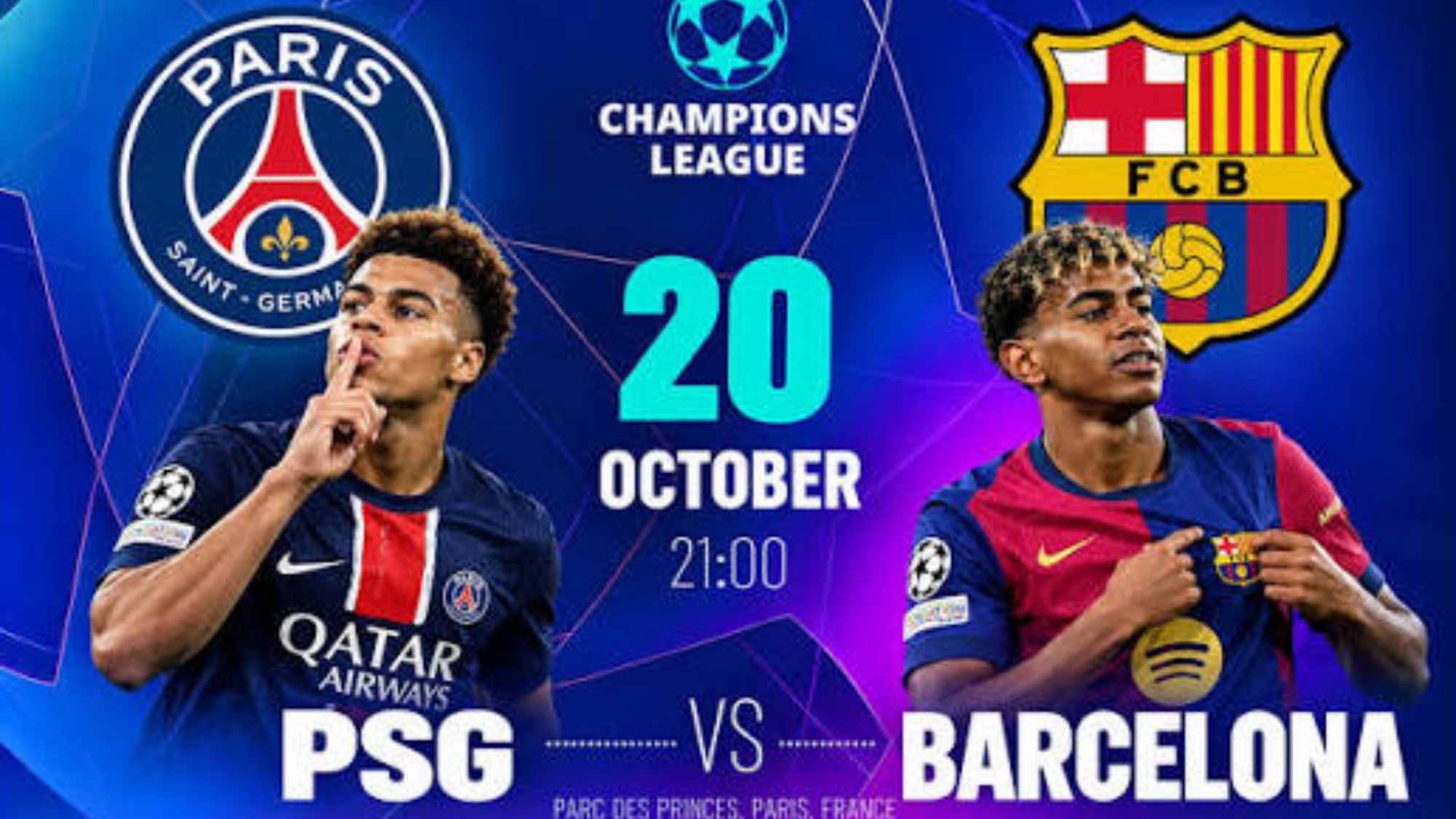
Barcelona travel to the Parc des Princes on Tuesday, October 20, for a Champions League meeting that will test more than their ability to score goals. Against Paris Saint-Germain, Barça must show that their attacking ambition can survive the pressure of an elite European away fixture.
Hansi Flick’s side enter the contest after beating Real Betis 5–2, but preparations have been complicated by injuries to Jules Koundé and Eric García. PSG have a significant absence of their own, with Nuno Mendes sidelined. Those setbacks could influence where both teams attack and how much protection their defensive replacements receive.
For Barcelona, the central question is straightforward: can they create enough danger to trouble PSG while maintaining the structure needed to defend when possession changes hands?
The tactical discussion below is pre-match analysis, rather than a description of confirmed team selections.
PSG vs Barcelona: Match Details
Fixture: Paris Saint-Germain vs FC Barcelona
Competition: UEFA Champions League
Stage: League phase, Matchday 3
Date: Tuesday, October 20, 2026
Stadium: Parc des Princes, Paris
Kick-off in Paris and Barcelona: 9:00 p.m. CEST
European Momentum Meets a More Demanding Examination
Barcelona have opened their Champions League campaign with a 5–1 victory over Feyenoord and a 4–1 away win against Galatasaray. Those results give them six points, nine goals scored and an encouraging platform before the trip to France. PSG, meanwhile, arrive at this fixture after winning 4–2 away to Manchester City on Matchday 2.
That combination makes this an especially useful test of Barcelona’s progress. Their opening European results show that they can produce goals in different settings. Paris should provide a sterner examination of how effectively they control a match when the opposition can punish small positional mistakes.
An away victory would strengthen Barça’s league-phase position considerably. However, their performance should also be judged by the quality of their decisions: how they escape pressure, whether they protect their defenders and how consistently they create chances without exposing themselves.
A team can enjoy long spells of possession and still allow the opponent the more dangerous opportunities. Avoiding that imbalance is likely to be one of Flick’s main priorities.
Barcelona’s Domestic Form Provides Confidence
The 5–2 victory over Betis extended Barcelona’s league start to nine wins from nine. Across those matches, they have scored 39 goals and conceded nine, according to the club’s official figures.
Those numbers explain the confidence surrounding the attack. Barcelona are producing enough goals to recover from difficult moments and keep opponents under pressure.
Nevertheless, the two goals conceded against Betis provide a useful reminder ahead of Paris: scoring heavily does not remove the need to manage defensive situations carefully.
Against PSG, Barça should place greater value on the possessions that follow an opposition chance. Immediately forcing another attack can create an open exchange when the team instead needs time to regain its shape.
The challenge is to preserve their attacking conviction while recognising when the match demands patience.
Team News: Barcelona Lose Two Important Defensive Options
Barcelona have confirmed that Eric García has a right-thigh injury, with an estimated recovery period of three to four weeks. Koundé has suffered a left-ankle sprain and will miss the PSG match. His availability for the following Clásico will depend on his recovery.
Their absences matter because defensive changes affect the relationships around the replacement players.
The midfielder nearest the ball may need to offer a shorter passing option. A winger may have to recover earlier. The centre-backs may need clearer communication about who steps forward and who protects the space behind.
Barcelona should therefore approach the problem collectively. Expecting an individual replacement to reproduce every aspect of the missing player’s contribution would be an unnecessarily difficult assignment.
Final squad announcements and the starting line-ups will clarify Flick’s solution. Until then, a definitive XI would imply more certainty than the available information supports.
PSG Team News: Nuno Mendes Absence Changes the Right-Wing Battle
PSG have confirmed that Nuno Mendes sustained a left-thigh injury against Strasbourg and will be sidelined for several weeks.
His absence creates an obvious area for Barcelona to examine, particularly if Lamine Yamal starts on the right.
However, a change at left-back does not automatically mean Yamal will enjoy repeated one-on-one opportunities. PSG could protect that side with a deeper winger, an additional midfielder or an earlier defensive shift whenever Barcelona switch possession.
That response could still benefit Barça. If PSG commit extra players to Yamal’s flank, space may appear centrally or on the opposite side.
The important decision will be recognising when to attack the replacement defender directly and when to use the attention around Yamal to free somebody else.
Tactical Battle One: Can Barça Play Through the First Press?
Barcelona’s build-up could establish the tone of the evening.
If they move the ball out of defence cleanly, they can force PSG to retreat and give their creative players time to assess the next pass. If they lose possession close to their own penalty area, the hosts can attack before Barça have organised their defensive cover.
The key will be providing the player on the ball with several useful options.
A midfielder dropping deeper can help, but Barcelona must avoid bringing everyone towards their own goal. Somebody needs to remain beyond the first line of pressure, ready to receive a pass that takes opponents out of the move.
There should also be room for a more direct solution. When PSG commit numbers forward to press, a well-placed pass towards an attacker can bypass that pressure.
The success of that approach depends on the second ball. Barça’s midfield must be close enough to support the receiver and compete for any loose possession.
Tactical Battle Two: Attacking Without Leaving the Defence Exposed
Barcelona’s positioning during their own attacks may be just as important as their defensive work without the ball.
If too many players move ahead of possession simultaneously, a misplaced pass can leave the centre-backs facing runners with little protection. That danger becomes more significant when defensive injuries have already reduced the available options.
A sensible approach would be to vary the full-backs’ movements. When one advances, the opposite side can remain more conservative. A midfielder can then protect the central route while still offering a passing outlet.
This structure also helps Barcelona sustain attacks. Players positioned behind the ball can collect clearances, switch play and prevent PSG from turning a defensive action into a clean counterattack.
The aim should be to attack in waves while keeping the distance between those waves manageable.
Tactical Battle Three: Give Lamine Yamal More Than One Route to Goal
Yamal should be a major reference point in Barcelona’s attacking plan, but the team must avoid making their intentions too predictable.
Repeatedly passing to him when he is stationary near the touchline would allow PSG time to organise support around their left-back.
Barcelona can improve his situations through the movement of others. An overlapping run can pull a defender away. A midfielder arriving inside can create a short combination. A forward occupying the nearest centre-back can make it harder for that defender to move across.
Quick switches of play could be particularly valuable. Receiving the ball while PSG are still shifting across would give Yamal a better opportunity to attack before the defensive cover settles.
His contribution should also be measured beyond dribbles and shots. Drawing two opponents and releasing a teammate into space can be the most effective action in the move.
Tactical Battle Four: The Midfield Must Control the Match’s Speed
Possession alone will not guarantee Barcelona control.
The more revealing question is whether their midfield can influence where and how quickly the game is played.
If PSG create a period of pressure, Barça need players who can receive calmly, protect the ball and connect several passes. Those sequences can help the defence move forward and reduce the crowd’s influence on the rhythm.
When PSG’s shape opens, Barcelona must recognise the opportunity to accelerate. An extra sideways pass can allow the defence to recover; an unnecessarily ambitious vertical pass can hand possession straight back.
If selected, Pedri’s positioning and decisions could be central to finding that balance. His task would involve helping Barcelona distinguish between an opening worth attacking and a moment that calls for another circulation of possession.
Three Situations That Could Decide the Result
The First Pass After Winning Possession
Barcelona should assess whether a counterattack is genuinely available. If the forward options are isolated, keeping the ball may be more valuable than forcing a difficult pass.
The Reaction After Losing Possession
The nearest players must decide quickly whether they can recover the ball. If PSG escape that initial pressure, the priority should become protecting central space and recovering together.
The Management of the Final 20 Minutes
An away team can undermine a strong performance by becoming stretched late on. Fresh legs, disciplined positioning and sensible use of possession could prove decisive if the scores remain close.
These details are less spectacular than a decisive finish, but they often determine which team creates the opportunity to produce one.
What Would a Strong Barcelona Performance Look Like?
A convincing display would contain more than attacking highlights.
Barcelona should aim to progress out of defence without repeated dangerous turnovers, create opportunities from several areas and keep enough players positioned to slow PSG’s transitions.
They must also respond well to adversity. Conceding first would require composure; scoring first would require continued ambition without unnecessary risk.
For supporters watching closely, one useful indicator will be the space around Barça’s defenders when PSG recover possession. If the midfield is nearby and the team can delay the attack, the structure is functioning. If defenders repeatedly retreat into large spaces against advancing opponents, an adjustment is needed.
PSG vs Barcelona Prediction
Prediction: PSG 2–2 Barcelona.
Barcelona’s attacking form gives them reason to believe they can score in Paris. However, the confirmed defensive absences complicate their task, while PSG’s latest European victory demonstrates the scale of the challenge.
A draw would represent a useful away result, particularly if Barça combine their attacking quality with a controlled performance.
Final Verdict
Barcelona head to Paris with confidence earned through results, but this fixture demands more than another productive night in front of goal.
Their strongest route to a positive outcome is a connected performance: attackers who offer movement, midfielders who manage pressure and defenders protected by the positioning of the entire team.
Yamal’s opportunities against a reshaped PSG left side could provide the attacking headline. Barcelona’s ability to control what happens after possession changes hands may ultimately decide the match.