Lionel Messi did not simply become a legend at FC Barcelona. He transformed the club’s history and helped define an entire generation of football.
From a 13-year-old arriving in Catalonia to a six-time Ballon d’Or winner while wearing the Barcelona shirt, Messi’s journey became one of the most extraordinary stories in the sport.
Across 778 official appearances, he scored 672 goals, provided 305 assists according to Barcelona’s records and won 35 trophies.
No other player has scored more competitive goals for Barcelona or made more official appearances for the club.
But numbers alone cannot fully explain Messi’s impact.
His extraordinary dribbling, creativity, passing and goalscoring ability made him the central figure in some of the greatest teams Barcelona have ever produced.
He was the difference-maker in unforgettable Champions League nights, the inspiration behind historic El Clásico victories and the player who connected Barcelona’s traditional football philosophy with a new era of success.
To understand why so many supporters consider Messi the greatest player in Barcelona history, it is worth looking beyond the statistics.
Lionel Messi’s Barcelona Career at a Glance
| Category | Barcelona record |
|---|---|
| Joined the club | 2000 |
| Official first-team debut | 16 October 2004 |
| Final season | 2020/21 |
| Official appearances | 778 |
| Official goals | 672 |
| Assists recorded by Barcelona | 305 |
| Trophies | 35 |
| LaLiga titles | 10 |
| Champions League titles | 4 |
| Copa del Rey titles | 7 |
| Spanish Super Cups | 8 |
| FIFA Club World Cups | 3 |
| UEFA Super Cups | 3 |
These records tell the story of a player who combined extraordinary individual performances with sustained team success.
Unlike many great footballers who achieve their peak across several clubs, Messi built the defining years of his career at Barcelona.
From Rosario to La Masia: Where the Story Began
Messi was born on 24 June 1987 in Rosario, Argentina.
He began playing football at a young age and developed his talent at Newell’s Old Boys.
His exceptional ability quickly attracted attention, but his path towards professional football was not straightforward.
As a child, Messi required treatment for a growth hormone deficiency. The financial cost of treatment was one of the challenges facing his family.
Barcelona recognised his potential and offered him an opportunity to continue his development in Spain.
In 2000, at just 13 years old, Messi arrived in Catalonia.
He entered Barcelona’s youth system, where his technical ability and intelligence quickly distinguished him from other players.
Despite his small stature, he possessed extraordinary balance, acceleration and close control.
He could move through crowded spaces without losing possession, change direction suddenly and make decisions at remarkable speed.
Those qualities suited Barcelona’s footballing philosophy.
Why La Masia Was the Right Environment
Barcelona’s academy placed considerable importance on technical development, positional awareness and intelligent passing.
Messi was naturally gifted in those areas.
The club’s approach allowed him to develop without needing to become a physically dominant player.
He learned to combine his dribbling with team movement, understand different attacking positions and make better decisions in possession.
La Masia did not create Messi’s talent, but it provided an environment in which that talent could develop.
The partnership would eventually change Barcelona’s history.
2004: Messi Makes His Official Barcelona Debut
Messi’s official first-team debut came on 16 October 2004 against Espanyol.
Frank Rijkaard was Barcelona’s manager, and the squad included established stars such as Ronaldinho, Samuel Eto’o and Deco.
At first, Messi was a promising young player trying to earn opportunities alongside experienced internationals.
His breakthrough accelerated during the 2004/05 season.
On 1 May 2005, he scored his first official Barcelona goal against Albacete.
The goal came after a clever exchange with Ronaldinho, who lifted the ball over the defence for Messi to finish.
It was a memorable early example of the understanding that developed between the two players.
Ronaldinho’s influence was particularly important during Messi’s first years.
The Brazilian star helped create a positive environment for the youngster and supported his transition into senior football.
Before long, Messi was no longer simply Barcelona’s most exciting prospect.
He was becoming one of the team’s most important players.
The Rise of a Superstar: 2006–2008
Messi’s development continued as Barcelona competed for domestic and European honours.
He was part of the squad that won the 2005/06 Champions League, although injury prevented him from appearing in the final against Arsenal.
During the following seasons, he produced performances that demonstrated his extraordinary potential.
One of the most famous came against Getafe in April 2007.
Messi collected the ball inside his own half, accelerated past several defenders and scored a spectacular solo goal.
The run immediately drew comparisons with Diego Maradona’s legendary goal against England at the 1986 World Cup.
The similarities were striking: close control, acceleration, balance and an ability to navigate through defenders who appeared to have closed every possible route.
That goal became one of the defining moments of Messi’s early Barcelona career.
It also provided a glimpse of the player he would become.
The Guardiola Era: When Messi Became Unstoppable
Pep Guardiola’s appointment as Barcelona manager in 2008 marked a turning point.
Guardiola introduced a demanding tactical system built around positional play, coordinated pressing and intelligent movement.
Messi became the central figure in that approach.
The most important tactical change involved his role in the attack.
Rather than operating exclusively as a right winger, Messi increasingly moved into central areas as a false nine.
This allowed him to receive possession between the opposition’s midfield and defence.
Defenders faced a difficult decision.
If they followed Messi into midfield, they could leave space behind for Barcelona’s other attackers.
If they stayed in position, Messi could turn, accelerate or create chances through the middle.
The system made Barcelona extremely difficult to defend against.
2008/09: Barcelona Win the Historic Treble
Guardiola’s first season produced one of the greatest campaigns in Barcelona history.
The team won LaLiga, the Copa del Rey and the Champions League.
Messi was central to all three competitions.
In the Champions League final against Manchester United in Rome, he scored Barcelona’s second goal with an unforgettable header.
The image of Messi rising to meet Xavi’s cross became one of the most recognisable moments of his career.
Barcelona won 2–0 and completed the treble.
Later that year, the club added the Spanish Super Cup, UEFA Super Cup and FIFA Club World Cup, becoming the first team to win six major trophies in a calendar year.
Messi had become the face of an extraordinary footballing era.
2011: Messi Leads Barcelona to Glory at Wembley
The 2010/11 season is widely regarded as one of the finest periods of Guardiola’s Barcelona.
The team combined exceptional technical quality with an aggressive pressing system and remarkable understanding between players.
Xavi and Andrés Iniesta controlled midfield.
Sergio Busquets provided balance and positional intelligence.
Messi operated as the team’s main attacking reference.
The Champions League final against Manchester United at Wembley became one of the clearest demonstrations of that team’s quality.
Barcelona won 3–1, with Messi scoring a crucial second-half goal from outside the penalty area.
His performance reflected his development into a complete attacking player.
He was no longer simply a winger who could beat defenders.
He could control the tempo of attacks, create opportunities for teammates and score from different positions.
Barcelona’s Wembley victory strengthened their reputation as one of the most influential teams in modern football.
2012: The Year Messi Scored 91 Goals
If one statistic captures Messi’s extraordinary goalscoring ability, it is his total of 91 goals during the 2012 calendar year.
He surpassed Gerd Müller’s previous record of 85 goals in a calendar year.
Messi’s total included goals for Barcelona and the Argentina national team.
The achievement was remarkable because of both its scale and the variety of goals involved.
He scored from close range, outside the penalty area, free-kicks, counterattacks and intricate passing moves.
He could beat defenders individually or finish opportunities created by teammates.
During the 2011/12 LaLiga season, Messi also scored 50 league goals, a record for a single Spanish top-flight campaign.
These numbers demonstrated how his game had evolved.
Messi had combined the creativity of an elite playmaker with the finishing ability of a prolific striker.
2015: Messi, Neymar and Suárez Create the MSN Era
After Guardiola’s departure, Barcelona entered another successful period under Luis Enrique.
The arrival of Luis Suárez completed an attacking trio featuring Messi, Neymar and the Uruguayan striker.
Together, they became known as MSN.
Their partnership offered Barcelona a different attacking identity.
Rather than relying exclusively on long spells of possession, the team could also attack quickly through devastating combinations between its forwards.
Messi contributed creativity from deeper positions and the right flank.
Neymar provided dribbling, flair and direct attacking movement.
Suárez offered intelligent runs, physical intensity and clinical finishing.
The three players complemented one another exceptionally well.
Barcelona’s Second Treble
In 2014/15, Barcelona won LaLiga, the Copa del Rey and the Champions League.
Messi delivered memorable performances throughout the campaign.
His two goals against Bayern Munich in the Champions League semi-final first leg were particularly significant.
The second goal, featuring a sudden change of direction that left Jérôme Boateng on the ground before Messi chipped Manuel Neuer, became one of the most replayed moments of his career.
Barcelona eventually defeated Juventus 3–1 in the Champions League final in Berlin.
It was Messi’s fourth European title with the club.
The achievement confirmed that Barcelona could build another great team around him, even with a different manager and tactical structure.
Messi’s Seven Greatest Barcelona Moments
Choosing Messi’s greatest performance is almost impossible.
His Barcelona career produced countless unforgettable moments, but several stand out for their quality, significance or emotional impact.
1. His First Barcelona Goal Against Albacete — 2005
A delicate finish after Ronaldinho’s assist marked the beginning of an extraordinary goalscoring career.
2. His Solo Goal Against Getafe — 2007
Messi dribbled past multiple opponents before scoring one of the most spectacular individual goals in Barcelona history.
3. His Champions League Final Header Against Manchester United — 2009
Messi’s header helped Barcelona secure a 2–0 victory in Rome and complete the club’s first treble.
4. His Solo Goal Against Real Madrid — 2011
In the Champions League semi-final at the Santiago Bernabéu, Messi scored twice in a 2–0 victory.
His second goal, a brilliant run through Madrid’s defence, became an iconic El Clásico moment.
5. His Goal Against Manchester United at Wembley — 2011
Messi scored Barcelona’s second goal in the 3–1 Champions League final victory, helping Guardiola’s team secure another European crown.
6. His Brilliant Goal Against Bayern Munich — 2015
Messi’s individual brilliance against Bayern Munich produced one of the most memorable goals of the MSN era.
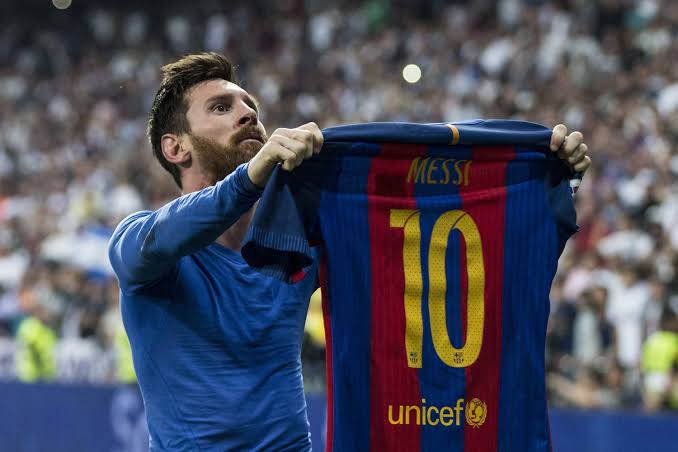
7. His Last-Minute Winner Against Real Madrid — 2017
At the Santiago Bernabéu, Messi scored a dramatic late winner in Barcelona’s 3–2 victory.
His celebration, holding his shirt towards the crowd, became one of the most famous images in El Clásico history.
Each moment represents a different aspect of his greatness: technique, composure, creativity, courage and the ability to perform under pressure.
Why Messi Was More Than a Goalscorer
Messi’s 672 goals are extraordinary.
But his greatest quality may have been his ability to influence almost every phase of an attacking move.
He could begin an attack in midfield, beat an opponent, create space and deliver the final pass.
Or he could finish the move himself.
This combination made him exceptionally difficult to defend against.
Dribbling
Messi’s low centre of gravity, balance and close control allowed him to change direction without losing speed.
He could escape pressure in spaces where other players would be forced to pass backwards.
Passing and Vision
Messi developed into one of football’s most creative playmakers.
His ability to recognise runs, deliver through balls and switch the direction of attacks allowed him to create opportunities even when opponents successfully limited his shooting chances.
Finishing
Messi was capable of scoring with powerful shots, delicate chips, curling efforts and free-kicks.
His left foot became one of the most recognisable weapons in world football.
Decision-Making
Perhaps the most overlooked element of Messi’s game was his ability to choose the right action.
He understood when to dribble, when to pass and when to shoot.
That intelligence helped him remain effective even as his playing style evolved with age.
Messi and El Clásico: A Rivalry That Defined His Career
Few fixtures showcased Messi’s competitive influence more clearly than El Clásico.
Barcelona’s rivalry with Real Madrid provided the stage for some of his most memorable performances.
Messi scored 26 goals in competitive matches against Real Madrid, making him the fixture’s all-time leading goalscorer.
His performances included a hat-trick in the 3–3 draw at Camp Nou in 2007, the two goals in the 2011 Champions League semi-final and the dramatic winner in 2017.
These matches carried significance beyond the result.
They were watched by millions around the world and helped establish Messi as one of football’s most recognisable figures.
His rivalry with Cristiano Ronaldo added another dimension to the era.
For nearly a decade, the two players pushed the standards of individual performance to extraordinary heights.
Their competition became one of the defining stories of modern football.
Messi’s Relationship With Xavi and Iniesta
Messi’s success was also connected to the exceptional teammates who surrounded him.
Xavi and Iniesta were particularly important.
Their technical quality, movement and understanding of possession helped create an environment in which Messi could thrive.
Xavi controlled the rhythm of matches through intelligent passing and positioning.
Iniesta provided creativity, dribbling and the ability to escape pressure.
Messi connected their midfield control with Barcelona’s attacking movement.
Together, they formed the creative foundation of Guardiola’s greatest teams.
Their understanding developed over years of playing within Barcelona’s footballing philosophy.
This partnership demonstrated the importance of collective structure.
Messi’s individual brilliance was extraordinary, but Barcelona’s greatest achievements came when that talent operated within a highly coordinated team.
Messi’s 35 Barcelona Trophies
Messi’s honours reflect the extraordinary success Barcelona enjoyed during his career.
| Competition | Titles |
|---|---|
| LaLiga | 10 |
| Copa del Rey | 7 |
| Spanish Super Cup | 8 |
| UEFA Champions League | 4 |
| UEFA Super Cup | 3 |
| FIFA Club World Cup | 3 |
| Total | 35 |
He also won six of his eight Ballon d’Or awards during his Barcelona career, in 2009, 2010, 2011, 2012, 2015 and 2019.
The consistency behind those achievements is remarkable.
Messi remained one of the world’s leading players through different managerial eras, tactical systems and squad changes.
That longevity is a major part of his legacy.
Why Messi Left Barcelona in 2021
Messi’s departure remains one of the most emotional moments in Barcelona’s modern history.
In August 2021, the club announced that he would not continue despite an agreement in principle between the parties.
Barcelona cited financial and structural obstacles connected to Spanish league regulations.
The announcement shocked supporters who had expected Messi to finish his career at the club.
During his farewell press conference, Messi became emotional as he reflected on his years in Barcelona.
He subsequently joined Paris Saint-Germain.
The departure marked the end of an extraordinary period.
Messi had arrived as a teenager and left as Barcelona’s record goalscorer, appearance maker and most decorated player.
His final trophy with the club was the 2020/21 Copa del Rey.
Although his career continued elsewhere, the defining chapter of his club football legacy had been written in Catalonia.
Could Barcelona Ever Produce Another Messi?
Barcelona have continued developing exceptional young players through La Masia.
Lamine Yamal, for example, has emerged as one of the most exciting talents of his generation.
His creativity, dribbling and confidence have naturally attracted comparisons with Messi.
However, such comparisons require perspective.
Messi’s Barcelona career lasted more than 17 years at senior level and included an extraordinary combination of goals, assists, trophies and individual awards.
Expecting any young player to reproduce those achievements would be unrealistic.
Yamal and other emerging talents deserve the opportunity to build their own identities.
Barcelona’s greatest challenge is not finding an exact replacement for Messi.
It is creating a strong collective team capable of producing sustained success while allowing exceptional individuals to flourish.
That philosophy helped Messi develop in the first place.
Is Lionel Messi the Greatest Barcelona Player of All Time?
Barcelona’s history includes extraordinary footballers.
Johan Cruyff transformed the club’s identity as both player and manager.
Ronaldinho restored joy and excitement during a crucial period.
Xavi and Iniesta became central figures in one of football’s most influential teams.
Carles Puyol represented leadership, commitment and defensive excellence.
Each contributed something important to the club’s history.
Messi’s claim to being Barcelona’s greatest player rests on the extraordinary combination of his individual records, longevity and influence on team success.
He is the club’s all-time leading goalscorer.
He has made more competitive appearances than any other Barcelona player.
He won 35 trophies.
He delivered decisive performances in Champions League finals, domestic title races and El Clásico encounters.
And he remained the central attacking figure across several different Barcelona teams.
That combination makes his case exceptionally strong.
For many supporters, there is no serious debate.
Frequently Asked Questions About Lionel Messi at Barcelona
How many goals did Messi score for Barcelona?
Messi scored 672 goals in 778 official first-team appearances.
How many trophies did Messi win with Barcelona?
He won 35 trophies, including 10 LaLiga titles, seven Copa del Rey trophies and four Champions League titles.
How many Champions League titles did Messi win?
Messi was part of four Barcelona Champions League-winning campaigns: 2006, 2009, 2011 and 2015.
He played in the winning finals of 2009, 2011 and 2015 but missed the 2006 final through injury.
When did Messi join Barcelona?
Messi joined Barcelona’s youth system in 2000 at the age of 13.
When did Messi make his official Barcelona debut?
He made his official first-team debut against Espanyol on 16 October 2004.
Why did Messi leave Barcelona?
Messi left in August 2021 after Barcelona said financial and structural obstacles under LaLiga regulations prevented the club from registering the agreed contract.
Who is Barcelona’s all-time leading goalscorer?
Lionel Messi, with 672 official goals.
How many Ballon d’Or awards did Messi win while at Barcelona?
He won six Ballon d’Or awards during his Barcelona career.
Conclusion: The Player Who Became Barcelona’s Greatest Symbol
Lionel Messi’s Barcelona career is one of football’s most extraordinary stories.
A young boy arrived from Argentina with exceptional talent and the ambition to become a professional footballer.
He developed through La Masia, earned his opportunity under Frank Rijkaard and became the central figure in the greatest Barcelona teams of the modern era.
He scored 672 goals, won 35 trophies and produced moments that will remain part of football history for generations.
But his influence cannot be reduced to numbers.
Messi helped make Barcelona’s style of football famous around the world.
He inspired millions of supporters, raised expectations of what an attacking player could achieve and became a symbol of the club’s most successful era.
Barcelona will continue to produce outstanding players.
New stars will emerge, records may eventually be challenged and future generations will create their own unforgettable memories.
Yet Messi’s place in the club’s history is secure.
He did not simply play for Barcelona. For nearly two decades, he helped define what Barcelona meant to the football world.
For countless Culés, Lionel Messi will always be the greatest player to wear the blaugrana shirt.
Visca Barça!